
An avalanche is a very real winter hazard, especially in steeper ravines. Everyone in your group should have a good knowledge of avalanche safety. Education and training are critical, so each member of your group should take an avalanche safety course.Steep slopes with unstable deep snow hold the deadly risk of avalanche. If you hike in the mountains in winter, here is some avalanche information you need to know:
Check local avalanche conditions before you go.
When in doubt, ask questions or don't go.
Most avalanches occur during or immediately after a snowstorm.
Never travel alone. Carry and know how to use avalanche rescue beacons, probes and shovels when your party is in avalanche terrain.
Avoid steep, open areas of snow.
Unstable snow conditions can persist for several days after a storm.
Heed the warnings—they could save your life.
The Avalanche Danger Scale
The guidelines before describing avalanche probability should be used with your judgement, experience and local knowledge.
Low (green): Natural avalanches unlikely. Human trigger avalanches unlikely. Travel is generally safe. Normal caution advised.
Moderate (yellow): Natural avalanches unlikely. Human triggered avalanches possible. Use caution in steeper terrain on certain aspects.
Considerable (orange): Natural avalanches possible. Human triggered avalanches probable. Be increasingly cautious in steeper terrain.
High (red): Natural and human triggered avalanches likely. Travel in avalanche terrain is not recommended.
Extreme (red with black border): Widespread natural or human triggered avalanches certain. Avoid travel in avalanche terrain. Confine travel to low angle terrain well away from avalanche path run-outs.
Avalanche Safety Basics
Remember that avalanche danger rating levels are only general guidelines. Most avalanche accidents are caused by slab avalanches which are triggered by the victim or a member of the victim's party. However, any avalanche may cause injury or death and even small slides may be dangerous.Always practice safe route-finding skills and be aware of changing conditions. Learn how to use, and always carry, avalanche beacons, probes and shovels. You must be able to carry out a self-rescue in the event of a burial as time is critical. If you must go for help, it is generally considered too late. Learn to recognize avalanche terrain and understand snow stability evaluation techniques to help minimize your risk.No matter what the current avalanche danger there are avalanche safe areas in the mountains. Seek out the information needed to locate these areas and make informed decisions.
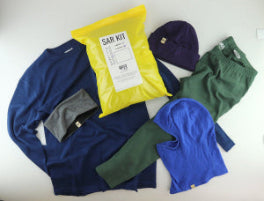
We re-purpose & package gently worn & factory second base layers into SAR Warming Kits distributed FREE to first responders across the USA and Canada.
SATISFACTION Guarantee
- 30-Day Returns/Exchanges
- Free Shipping Over $50
- NH-USA Customer Service
- 2-Year Product Warranty*
5TH GENERATION FAMILY-OWNED
We are a 5th-generation family-owned business in New Hampshire with over a century of woolen textile manufacturing expertise. Quality without compromise.
SUSTAINABLE & ETHICAL
- Woolmark Quality Standard
- OEKO-TEX Standard 100
- Responsible Wool Standard
- Earth-Conscious Packaging
GIVING BACK &
SAVING LIVES
We re-purpose & package gently worn & factory second base layers into SAR Warming Kits distributed FREE to first responders across the USA and Canada.
SATISFACTION Guarantee
- 30-Day Returns/Exchanges
- Free Shipping Over $50
- NH-USA Customer Service
- 2-Year Product Warranty*
5TH GENERATION FAMILY-OWNED
We are a 5th-generation family-owned business in New Hampshire with over a century of woolen textile manufacturing expertise. Quality without compromise.